
What Is Political Strategy? Everything You Need to Know
by Gotham Polling
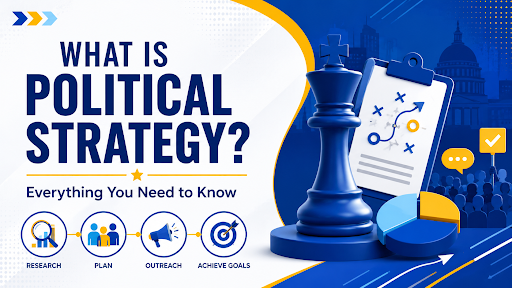
When people ask, what is political strategy, they are often thinking about election campaigns. While campaigns are a major part of it, political strategy extends far beyond winning votes. It is a structured process that helps candidates, organizations, advocacy groups, and policymakers make informed decisions, communicate effectively, and engage with the right audiences. A well-developed political strategy combines research, planning, messaging, and public opinion to achieve clearly defined objectives.
What Is Political Strategy and Why Does It Matter?
Understanding what is political strategy begins with recognizing that it is more than a collection of campaign tactics. Political strategy is a long-term approach to achieving political goals through careful planning, audience analysis, and evidence-based decision-making.
Whether the objective is increasing voter participation, promoting a policy initiative, or strengthening public trust, every successful strategy starts with identifying measurable goals and understanding the people it intends to reach.
An effective political strategy typically includes:
- Defining clear objectives
- Identifying key audiences
- Researching public opinion
- Developing persuasive messaging
- Selecting appropriate communication channels
- Measuring and refining results
Rather than relying on assumptions, successful political organizations use research to guide each step of the process.
The Building Blocks of Political Strategy
Political strategy is built upon several interconnected components that work together to support informed decision-making.
Research and Data Collection
Reliable research provides the foundation for every strategic decision. Polling, surveys, focus groups, and demographic analysis help organizations understand public attitudes before making major decisions.
Organizations that regularly gather data are better equipped to respond to changing public priorities and emerging issues. This evidence-based approach also reduces the risk of making decisions based on speculation.
If you are interested in understanding how research supports campaign planning, Gotham Polling’s article on How Does Sentiment Analysis Impact Political Strategy? offers valuable insights.
Audience Identification
Every political campaign or public initiative serves multiple audiences with different concerns and priorities.
A strong strategy identifies these groups and develops communication that addresses their specific interests instead of relying on one general message for everyone.
Audience segmentation often considers factors such as:
- Geographic location
- Age
- Education
- Community priorities
- Voting history
- Issue preferences
This allows communication efforts to become more relevant and effective.
Message Development
Research alone does not influence public opinion unless it is translated into meaningful communication.
Political messaging should be:
- Clear
- Consistent
- Credible
- Relevant
- Easy to understand
Rather than overwhelming audiences with information, effective messaging focuses on the issues people care about most.
Strategy vs Tactics
People often confuse strategy with tactics, but they serve different purposes.
Strategy defines the long-term direction and overall objectives.
Tactics are the individual actions used to achieve those objectives.
For example, a campaign may adopt a strategy focused on increasing support among younger voters. The tactics supporting that strategy could include digital advertising, campus events, social media outreach, and community engagement.
Understanding the difference between policy vs strategy can also help clarify how strategic planning differs from broader policy development.
The Role of Polling in Political Strategy
Polling plays a critical role throughout the strategic planning process.
Rather than simply predicting election outcomes, polling helps organizations answer practical questions such as:
- Which issues matter most to voters?
- How effective is current messaging?
- Which demographic groups require greater outreach?
- How are public opinions changing over time?
- What concerns should receive greater attention?
Professional polling provides objective insights that strengthen decision-making while reducing uncertainty.
For a deeper understanding of polling accuracy, you may also find Gotham Polling’s article on How Accurate Are Political Polling Methods? helpful.
Political Strategy Beyond Elections
Although elections receive the most attention, political strategy is equally valuable outside campaign seasons.
Many organizations rely on strategic planning to:
- Evaluate public policy proposals
- Build community engagement
- Support advocacy initiatives
- Improve government communication
- Measure public satisfaction
- Guide legislative priorities
Local governments, nonprofits, advocacy organizations, and public agencies all benefit from structured strategic planning informed by research.
Common Mistakes in Political Strategy
Even experienced organizations can encounter challenges when developing political strategies.
Some common mistakes include:
Relying on Assumptions
Public opinion changes over time. Decisions based on outdated assumptions can quickly become ineffective.
Ignoring Data
Research should inform decisions rather than simply confirm existing beliefs. Organizations that ignore objective findings risk making poor strategic choices.
Inconsistent Messaging
Changing messages too frequently can reduce public trust. Consistency helps reinforce credibility and improves recognition.
Failing to Measure Results
Political strategy should never remain static. Ongoing polling and performance measurement allow organizations to refine their approach as conditions evolve.
Why Data-Driven Political Strategy Produces Better Outcomes
Today’s political environment changes rapidly. Public priorities evolve, new issues emerge, and communication channels continue to expand.
Organizations that rely on evidence instead of assumptions are generally better prepared to adapt to these changes.
Professional polling, public opinion research, and strategic analysis provide leaders with reliable information that supports better planning and more effective communication.
Instead of reacting after circumstances change, organizations can anticipate challenges and adjust their strategies proactively.
Final Thoughts
Understanding what is political strategy is essential for anyone involved in campaigns, public affairs, advocacy, or government decision-making. At its core, political strategy is about making informed choices based on reliable research, thoughtful planning, and a clear understanding of public priorities.
By combining quality polling, meaningful data analysis, and consistent communication, organizations can build stronger relationships with the communities they serve while making more confident strategic decisions.