New York Public Opinion Polls: How Pollsters Measure Public Sentiment
by Gotham Polling
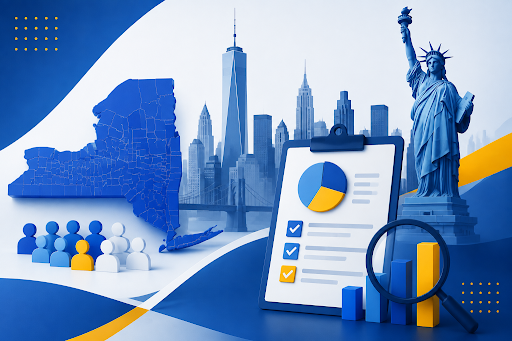
Public opinion plays an important role in understanding how communities think, what issues matter most to residents, and how perspectives change over time. In a diverse and dynamic state like New York, understanding public sentiment requires careful research methods, accurate data collection, and thoughtful analysis.
New York public opinion polls help organizations, researchers, policymakers, and community leaders gain insights into voter preferences, public concerns, and attitudes toward important issues. These polls provide a structured way to measure opinions and identify trends that may not always be visible through individual conversations or anecdotal feedback.
However, reliable polling is more than simply asking questions. It requires a combination of research design, sampling strategies, data analysis, and interpretation to ensure the results accurately represent the population being studied.
What Are New York Public Opinion Polls?
New York public opinion polls are research studies designed to measure the views, preferences, and attitudes of individuals across different communities throughout the state. Polls may examine topics such as public policy, community priorities, social issues, elections, or perceptions of organizations and initiatives.
Unlike informal surveys or online discussions, professional polling follows structured methodologies to collect representative data. The goal is to understand broader public sentiment by gathering responses from a carefully selected group of participants.
As discussed in our previous article on how political polls work, effective polling depends on asking the right questions, reaching the right audience, and analyzing responses using reliable research practices.
Why Measuring Public Sentiment Matters
Public sentiment provides valuable insight into how people view current issues and decisions that affect their communities. For organizations and leaders, understanding these perspectives can help create more informed strategies and improve communication.
New York has a wide range of communities with different economic backgrounds, regional priorities, and demographic characteristics. A statewide perspective may not always reflect the concerns of individual communities, which is why detailed public opinion research is essential.
Through polling, organizations can better understand:
- How residents feel about specific issues
- Which topics are considered most important
- How opinions vary between different groups
- Whether public attitudes are changing over time
- How effectively messages connect with audiences
This type of research allows decision-makers to rely on measurable insights rather than assumptions.
How Pollsters Conduct Public Opinion Research in New York
Professional polling involves several important steps to ensure accurate results. Each stage of the process influences the reliability of the final findings.
1. Defining the Research Objective
Every effective poll begins with a clear goal. Pollsters first determine what they want to understand and what information will be most useful.
For example, a public opinion poll may focus on:
- Understanding voter priorities
- Measuring awareness of an issue
- Evaluating public satisfaction
- Tracking changes in public attitudes
A well-defined objective helps create focused questions and produces more meaningful results.
2. Designing Effective Survey Questions
Question design is one of the most important parts of public opinion research. Poorly structured questions can influence responses or create unclear results.
Professional pollsters develop questions that are:
- Clear and easy for respondents to understand
- Neutral and free from unnecessary bias
- Relevant to the research objective
- Structured to collect measurable responses
The wording, order, and format of questions all contribute to the accuracy of a poll.
3. Selecting a Representative Sample
Since it is usually not practical to ask every resident in New York for their opinion, pollsters use sampling techniques to select a group that reflects the larger population.
A strong sample considers factors such as:
- Geographic location
- Age groups
- Demographic characteristics
- Political participation patterns
- Other relevant population factors
As explained in our article on how sampling techniques impact political poll accuracy, the quality of a sample directly affects how confidently researchers can interpret polling results.
4. Collecting Responses Through Reliable Methods
Pollsters use different methods to collect public opinion data depending on the research goals and target audience.
Common approaches include:
- Telephone surveys
- Online surveys
- Text-based surveys
- Mixed-method research approaches
Each method has advantages and limitations. The right approach depends on factors such as audience accessibility, research timeline, and the type of information being collected.
You can learn more about different research approaches in our guide on the different types of polling methods.
Understanding Voter Sentiment Through Polling Data
Public opinion polls provide more than simple approval or disapproval numbers. They help researchers understand the reasons behind public attitudes and how those views develop.
For example, polling data can reveal:
- Which issues are receiving increased attention
- How communities prioritize challenges
- What factors influence public perception
- How opinions differ across geographic areas
Understanding these patterns allows organizations to communicate more effectively and make decisions based on measurable evidence.
Our previous research on factors that influence voter sentiment explores how different factors can shape public attitudes and opinions.
The Role of Data Analysis in Public Opinion Polling
Collecting responses is only one part of the polling process. The next step is analyzing the data to identify meaningful trends and insights.
Professional analysis may include:
- Reviewing response patterns
- Comparing results across demographic groups
- Identifying changes over time
- Evaluating statistical reliability
Careful analysis helps separate significant findings from random variations, allowing organizations to make better-informed decisions.
How Organizations Use New York Public Opinion Polls
Public opinion research supports a wide range of organizations that need to understand their audiences.
Applications of polling data include:
Policy Research
Organizations can use public opinion data to better understand community priorities and evaluate how residents perceive important issues.
Advocacy and Public Awareness Campaigns
Polling helps measure awareness levels, understand audience concerns, and evaluate whether communication efforts are reaching the intended audience.
Our article on how advocacy organizations use public opinion data explains how research insights support strategic decision-making.
Community Engagement
Local organizations and government institutions can use polling to better understand residents’ needs and improve engagement efforts.
As explored in our article on community engagement polling, collecting public feedback helps organizations create stronger connections with the communities they serve.
Challenges in Measuring Public Sentiment
While polling provides valuable insights, accurate research requires careful planning and methodology.
Some common challenges include:
Reaching a Diverse Population
New York includes communities with different backgrounds, experiences, and communication preferences. Reaching a representative audience requires thoughtful research design.
Changing Public Opinions
Public sentiment can change quickly based on new information, events, or emerging issues. Polls capture opinions at a specific point in time, making timing an important consideration.
Maintaining Neutrality
Reliable polling requires objective research practices. Neutral question design, transparent methodology, and accurate analysis help ensure results reflect respondents’ views rather than researcher assumptions.
Why Reliable Polling Matters
New York public opinion polls provide valuable information about what people think, what issues matter to them, and how perspectives evolve. When conducted using reliable research methods, polling offers organizations a clearer understanding of public sentiment.
Accurate polling is not about predicting opinions or influencing outcomes. It is about collecting, analyzing, and presenting data that helps organizations better understand the communities they serve.
By combining strong methodology, representative sampling, and careful analysis, professional polling provides meaningful insights that support informed decision-making.
Final Thoughts
Understanding public sentiment requires more than collecting opinions. It requires a structured research approach that considers who is being surveyed, how questions are designed, and how results are interpreted.
New York public opinion polls help organizations gain a deeper understanding of community perspectives and identify important trends across the state. With reliable data and thoughtful analysis, polling becomes a valuable tool for research, communication, and strategic planning.